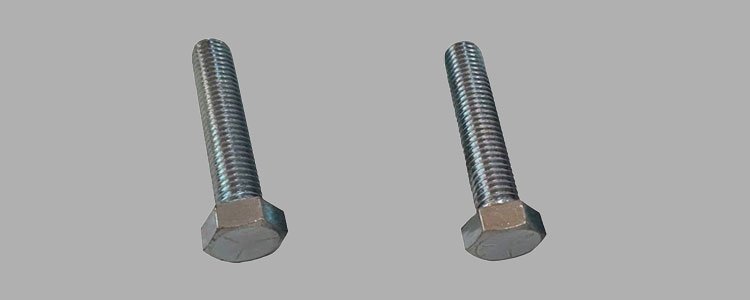
ASME Bolt refers to bolts manufactured according to standards published by the American Society of Mechanical Engineers (ASME). These bolts are widely used throughout the United States, Canada, and many international industrial projects.
Unlike metric bolts manufactured to ISO or DIN standards, ASME bolts use inch dimensions and Unified threads such as UNC and UNF. ASME B18.2.1 is the most common standard covering hex head bolts.
What Does ASME Stand For?
ASME stands for the American Society of Mechanical Engineers. It is a global engineering and technology organization that has developed and maintained more than 1,200 industry standards, including those for boilers, pressure vessels and fasteners, and is an authoritative body in the field of mechanical engineering.
Is ANSI B18.2.1 the Same as ASME B18.2.1?
Historically, this standard was approved and published by ANSI (American National Standards Institute) and numbered ANSI B18.2.1.
Later, the technical maintenance and revision of the standard were handed over to ASME, and the current version is officially numbered ASME B18.2.1 (covering square head and hex bolts).
The actual contents (size, tolerances, markings) are almost identical. In engineering procurement, the two are usually considered equivalent, but the latest drawings and specifications should indicate ASME B18.2.1.
What Thread Types Do ASME Bolts Use?
ASME bolts primarily utilize the UN (Unified Thread) series, in accordance with the ASME B1.1 standard:
- Coarse thread (UNC): Most common; the preferred choice.
- Fine thread (UNF): Used for thin-walled components or applications requiring high vibration resistance.
- Ultra-fine teeth (UNEF): for special precision applications.
- Additionally, there is NPT (American Standard Taper Pipe Thread) used for pipe connections; however, as it is a type of pipe thread, it falls outside the scope of standard bolt threads.
What Materials Are ASME Bolts Made Of?
- Carbon steel: SA-307 (low-carbon steel, general purpose).
- Alloy steel: SA-193 B7 (chromium-molybdenum steel, for high-temperature, high-pressure bolting).
- Stainless steel: SA-193 B8 (304) and B8M (316), for corrosion-resistant applications.
- Low-temperature steel: SA-320 L7 (for sub-zero temperature service).
- Special alloys: Monel, Hastelloy (for extremely corrosive environments involving strong acids, seawater, etc.).
Common Grades of ASME Bolts
| Item | Grade | Tensile strength (MPa) | Typical use | Matching nut |
|---|---|---|---|---|
| Carbon steel | SA-307 Grade A / B | ~420 | Water pipes, low-pressure flanges, non-critical structures, temporary fixings | SA-194 2H |
| Medium-to-high strength alloy steel | SA-193 Grade B7 | 860 | Petrochemicals, electric power, pressure vessels, and high-temperature, high-pressure flanges | SA-194 2H |
| Resistance to hydrogen sulfide corrosion | SA-193 Grade B7M | 860(hardness ≤235 HB) | H₂S-bearing oil and gas fields: prevention of sulfide stress cracking | SA-194 2HM |
| 304 stainless steel | SA-193 Grade B8 | 515 | Food, pharmaceutical, freshwater, and general chemical environments | SA-194 8 |
| 316 Stainless Steel (Highly Corrosion-Resistant) | SA-193 Grade B8M | 515 | Seawater, chloride-containing media, and strongly acidic environments. | SA-194 8M |
| Low-temperature impact (cold resistance) | SA-320 Grade L7 | 860 | LNG (Liquefied Natural Gas), Arctic projects (-101°C) | SA-194 7 |
| High-strength structural applications (bridge construction) | ASTM A325 (or F3125 Grade A325) | 830~860 | Steel structure connections (large hexagon head); torque-shear type is commonly used. | ASTM A563 DH |
| Ultra-high strength structural use | ASTM A490 (or F3125 Grade A490) | 1030 | Heavy steel structures and long-span bridges (galvanizing prohibited to prevent hydrogen embrittlement) | ASTM A563 DH |
ASME vs ASTM
- ASTM (American Society for Testing and Materials): Focuses on defining the chemical composition, mechanical properties, and testing methods for materials (such as ASTM A193).
- ASME: Based on ASTM material standards, it adds design rules, manufacturing processes, inspection markings, and restrictions on the use of pressure vessels.
ASME standards typically reference ASTM material grades. For example, the raw materials for bolts must meet ASTM A193, but the usage specifications for finished bolts must comply with ASME Section II (Materials). ASME standards lean more towards the “engineering application” side.
ASME vs ISO Bolts
| Item | ASME (US Standard) | ISO (International Metric System) |
|---|---|---|
| Dimension units | Imperial units (inches) | Metric (millimeters) |
| Thread standards | UN (60° tooth angle, flat top and flat bottom) | M (ISO metric thread, 60° thread angle) |
| Strength designation | Material grade (e.g., B7) or SAE class (e.g., Grade 8) | Property class (e.g., class 8.8, class 10.9) |
| Interchangeability | They are not interchangeable; the wrench sizes and thread pitches differ. | Selection must be made strictly according to the region; ASME standards are mandatory for exports to the United States. |
ASME vs DIN Bolts
DIN (German Industrial Standard) is a mainstream European standard that also utilizes metric dimensions; however, details such as head height, width across flats, and thread run-out sometimes differ slightly—and are often stricter—than those of ISO standards.
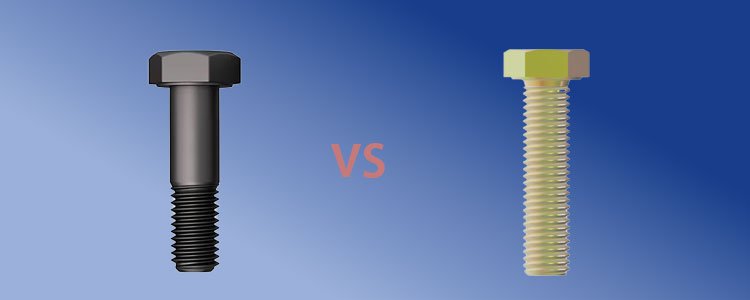
- ASME bolts typically have higher heads and larger cross-flat dimensions (such as heavy-duty hex bolts).
- DIN bolts (such as DIN 933) have relatively lower head heights and a more compact design.
- ASME flange connection strength calculations are based on their specific dimensions and cannot be directly interchanged; each must be selected separately according to its respective standard.
ASME Bolt Dimensions
ASME bolt dimensions strictly adhere to the ASME B18.2.1 (hex bolts) and ASME B18.2.2 (hex nuts) standards.
- Diameter range: 1/4 inch to 4 inches (metric equivalent: approx. M6 to M100)
- Length range: typically from 1/2 inch to 30 inches; lengths exceeding 12 inches require special customization.
- Key dimensions: include nominal size, threads per inch, width across flats, head height, and thread length.
For ASME bolts, the thread length is not simply equal to the diameter but varies with the total length; specifically, one must consult the “Thread Length” column in the B18.2.1 tables to ensure there is a sufficient unthreaded (plain shank) section within the clamping zone.
How to Read an ASME Bolt Size?
| NO. | Item | Size | Interpretation |
|---|---|---|---|
| 1 | Nominal diameter | 1/2″ | The basic dimension of the bolt’s outer diameter (i.e., the nominal value of the thread’s major diameter). Note: This is in inches, not millimeters. Common sizes include 1/4, 3/8, 1/2, 5/8, 3/4, 1″, 1-1/8″, etc. |
| 2 | Threads per inch | -13 | Indicates that there are 13 threads within a length of 1 inch (25.4 mm). The higher the number, the finer the threads. |
| 3 | Threaded Series | UNC | Thread types: UNC = Coarse thread UNF = Fine thread UNEF = Ultra-fine thread UN = Fixed pitch |
| 4 | Length | x 3″ | Nominal length, in inches. For hex head bolts, this length does not include the head; it refers only to the length of the shank from the head support surface to the end of the thread. |
| 5 | Material/Grade | SA-193 B7 | Specify the material standard and strength grade (this part may appear at the beginning or the end, but is typically included in the format). |
- Designation 3/4″-10 UNC x 4″: Read as “hex bolt with a 3/4-inch diameter, 10 threads per inch (coarse thread), and a length of 4 inches.”
- Designation 1″-8 UNF x 5″: Read as “hex bolt with a 1-inch diameter, 8 threads per inch (fine thread), and a length of 5 inches” (fine threads are typically used for thin-walled components or vibration-resistant applications).
Where Are ASME Bolts Used?
- Construction
- Oil & Gas
- Mining
- Heavy Equipment
- Wind Energy
- Automotive
- Railway
- Bridge
- Marine
Advantages of ASME Bolts
- High interchangeability
- Worldwide availability
- Excellent strength
- Strict dimensional tolerance
- Easy maintenance
How to Choose an ASME Bolt?
- Environment: Indoor, outdoor, high temperature, low temperature, seawater
- Load: Calculate tensile stress area, tensile strength, and yield strength
- Diameter: Consult the ASME B1.1 thread tensile stress area table and select the smallest standard diameter greater than or equal to the calculated value.
- Thread: Select UNC or UNF
- Length: Total bolt length ≥ total thickness of clamped parts + washer thickness + nut height + protrusion of 2–3 thread pitches.
- Coating: Electro-galvanized, hot-dip galvanized, Teflon, Dacromet, etc.
- Nut: Nut hardness must not be lower than that of the bolt, and the material grade must correspond.
Why Choose Bystrong as Your ASME Bolt Manufacturer?
- 20+ Years Manufacturing Experience
- OEM & ODM Support
- UNC / UNF Custom Production
- Carbon Steel, Stainless Steel & Alloy Steel
- Zinc Plating, HDG, Dacromet & Geomet
- Global Export Experience
- Fast Delivery